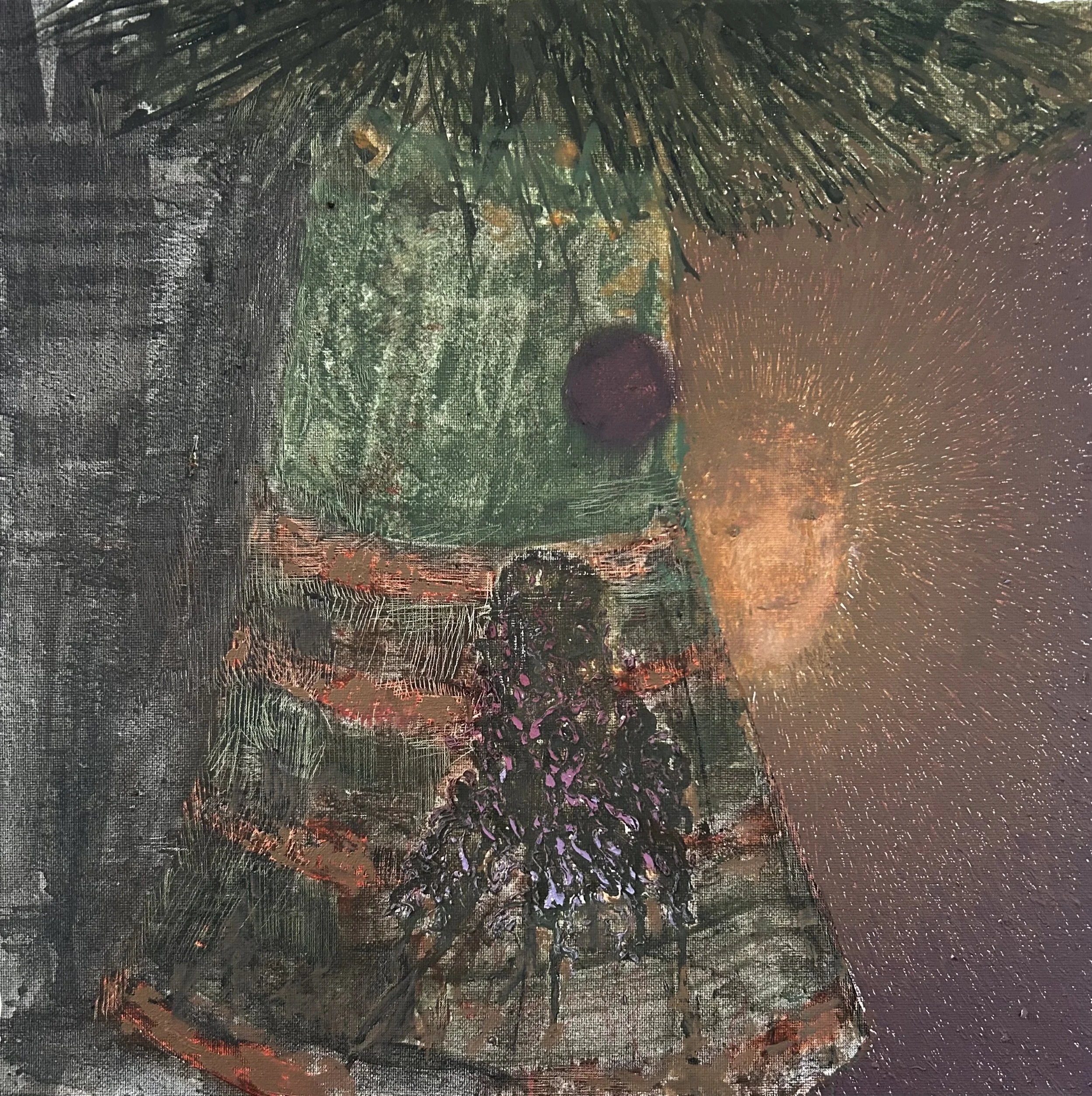
December, oil on canvas, 40 x 40 cm, 2025
Can you start by saying a little about your background? How did you first begin painting?
I remember my first encounter with a box of watercolours when I was three years old. I painted for a few dozen minutes, and I remember feeling happy.
When I was eleven, a pharmacist gave me a recipe for preparing a ground for oil painting, along with a palette he had made himself. He was an amateur painter, but he had studied at the Academy of Fine Arts in Bucharest, where he had been taught by some of the most important Romanian painters of the interwar period. That was how I began painting in oils.
I attended an art school during my middle-school years, then went on to art high school and eventually to the Academy of Fine Arts in Bucharest.
I married my fellow student Pepine, who was also in the painting department, and together we had five children. We lived in a bohemian household, painting whenever and wherever we could, among household objects and children’s toys, constantly getting in one another’s way — and allowing ourselves to be interrupted.
We deliberately kept our distance from the organised art world and its institutions at the time. The Communists were in power, Ceaușescu’s rule was dictatorial, and the whole atmosphere was something to be avoided. We believed that what really mattered was to work at home, to discuss and debate things among ourselves, sometimes with a fellow artist or two.
That was how it all began. And this rather withdrawn way of living and working has remained the dominant one throughout my life.
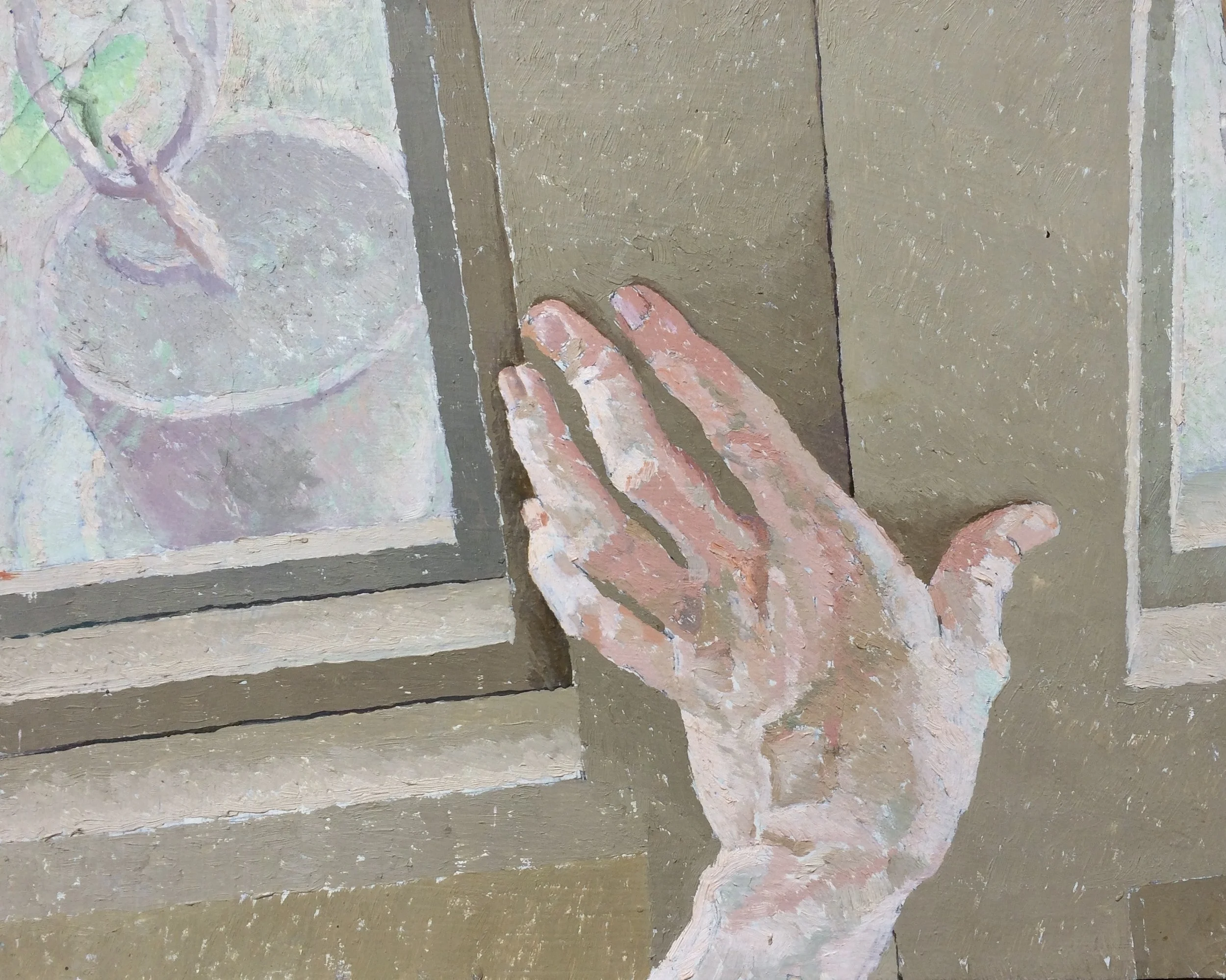
Mână la fereastră (Hand at the Window), Oil on cardboard, 22.8 x 28.5 cm, 1997
Is your work influenced by your surroundings? What is it like being an artist based in Bucharest?
From the age of twelve, I began to fall in love with my Bucharest — a city connected in my mind with the art schools I attended, housed in old buildings in the city centre, dilapidated but full of poetry.
I used to go to two art supply shops with my shopping list. From my early school years onwards, I regularly visited the Dalles Gallery, the largest exhibition space in the city, where I could see exhibitions by the older artists. My friends were almost exclusively my fellow students. It was a miniature artist’s life, and of course all these experiences shaped me.
Later on, however, my connections with other artists — very few, and carefully chosen — became particularly important. I remained close to the Prolog Group, whose members I felt a strong affinity with. They were the immediate artistic environment that influenced me.
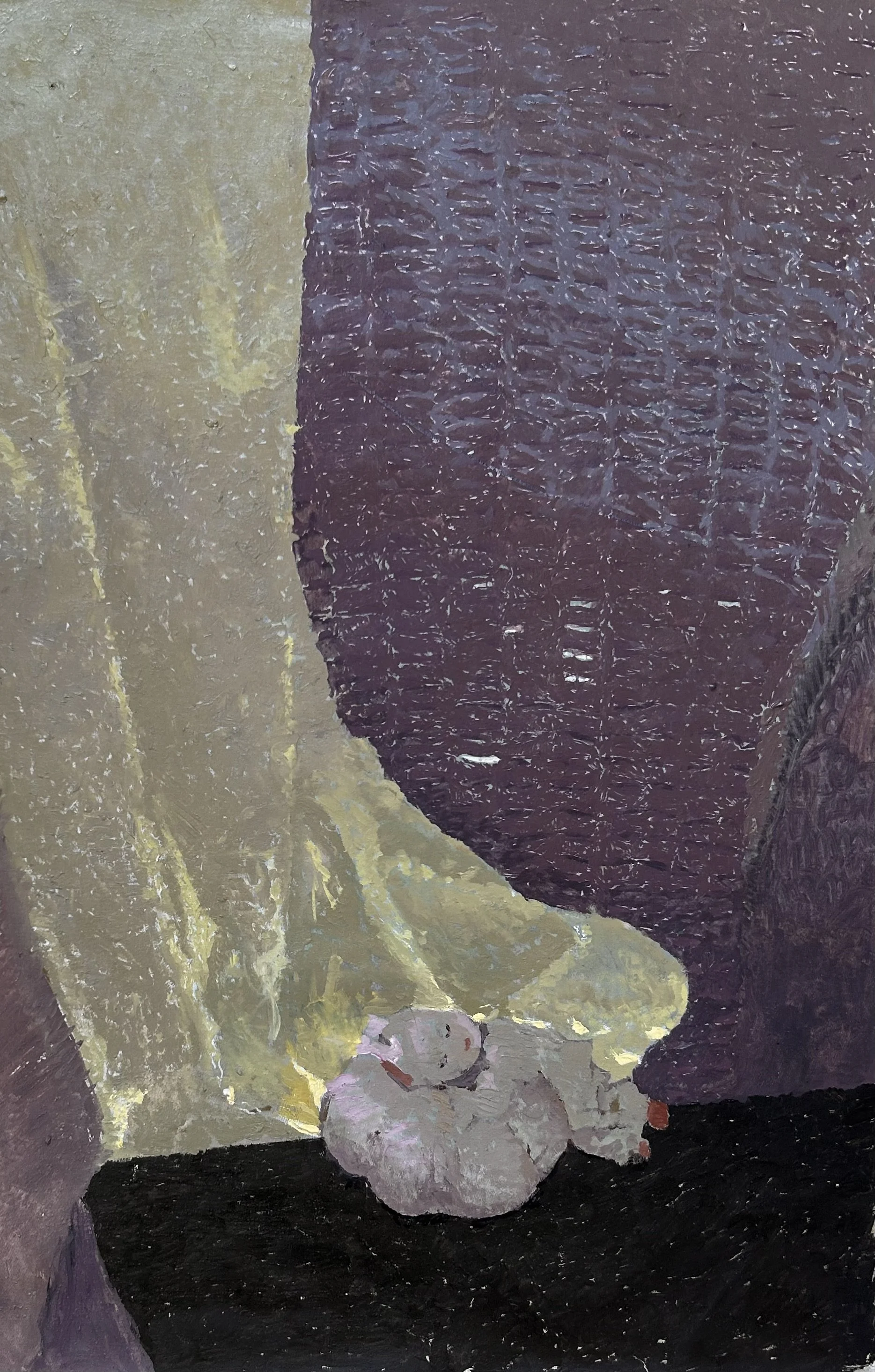
Silk Toy, oil on canvas, 50 x 33 cm, 2025
There was, of course, also the broader influence of painting from southern Romania: that muted, sometimes misty quality of colour that I had been breathing in at school, during visits to museums, and even in the very air of the city.
But there is also an opposite kind of influence: the moment when you decide to do precisely the opposite of something that is particularly remarkable or dominant. For example, in the Bucharest art school of those years, the brushstroke — in the sense of the French expression coup de pinceau — was almost worshipped. Even though it was never formally taught as a doctrine, the admiration for the movement of the brush, its vibration, and the drawing that emerged from the strokes of colour enjoyed enormous prestige. After 1992, I felt that I wanted to do the opposite. I wanted to let the colour touch the surface as though it had been printed onto it, or to arrange brushstrokes like the stitches of an embroidery, or to let a wave of liquid colour fall, accidentally, under its own weight.
In your most recent exhibitions, I noticed that you tend to show pieces from several different bodies of work and time. It’s refreshing to see shows where all the work isn’t produced in a brief period.
For many years, I didn’t concern myself with exhibiting my work. That is the main reason why my exhibitions bring together works from such different periods. I find this more unsettling than refreshing.
The older works, which I am now obliged to search for and look at again when my galleries make their selections, have more strength than the ones I am working on today. They influence my current work.
Any present work, while it is still in progress, exists under the sign of not-seeing. I don’t know what I am doing; I cannot see what I am doing. It is as though I were sending colours on a mission, without knowing where they are going, whether they will ever arrive, or whether they will return. I wait for news from them.
The older works, on the other hand, are already settled on their shelves. Artistic periods have taken shape and acquired names, and these works have found their place somewhere. Even though they were not exhibited at the time, they have the air of their own era.
They reappear like strangers, enriched by time and more self-assured. It is extraordinary what time can do to an object that has been waiting in a cupboard for several decades.
The new works, by contrast, do not yet have names. They are still a little intimidated.
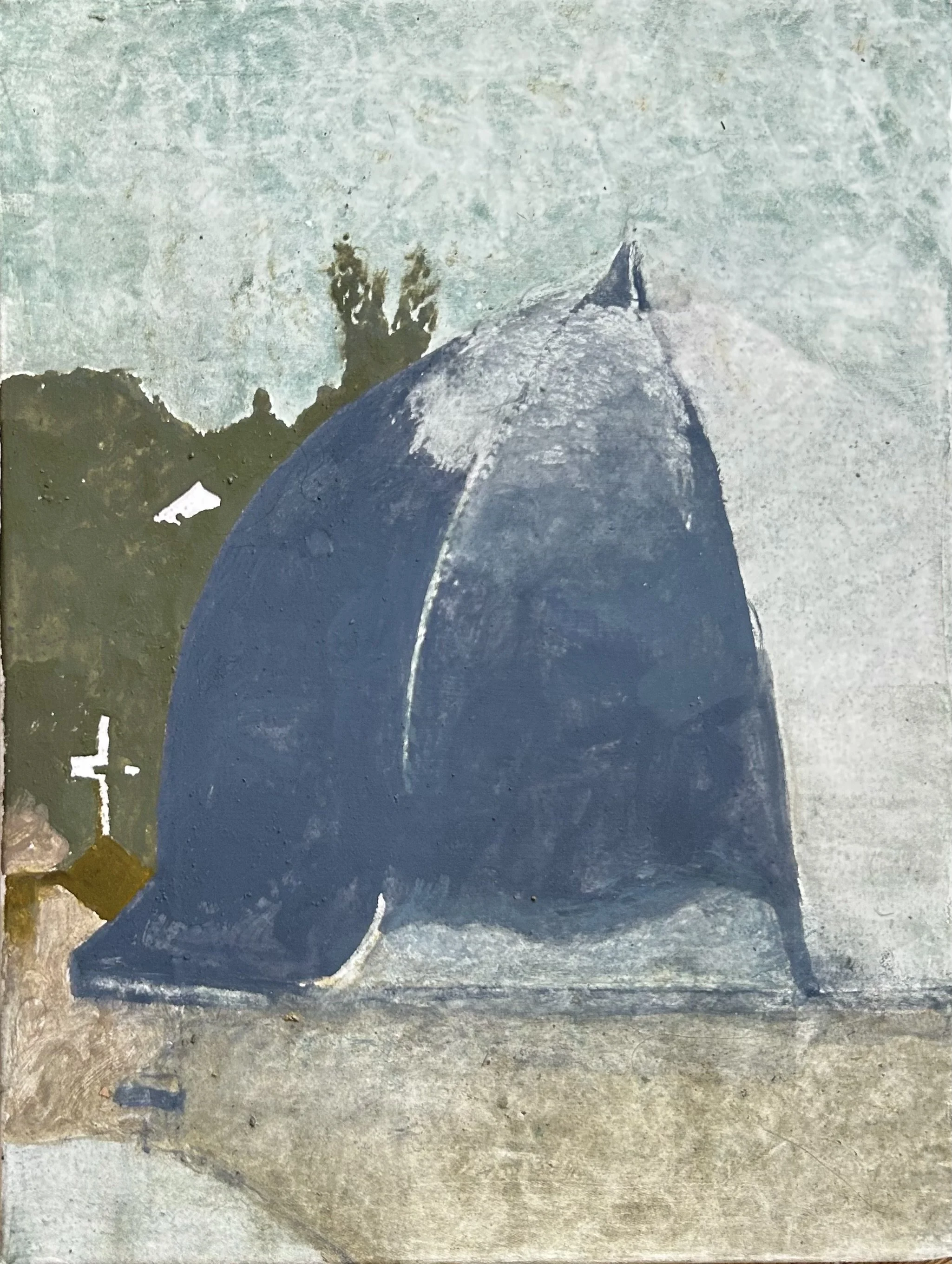
Landscape with Dome, Oil on canvas,30 x 40 cm, 2026
When you’re preparing for a show, do you select all the work or is it often curated in collaboration with galleries?
I have never actually put together an exhibition myself! Whenever someone has said to me, “Come on, let’s do an exhibition,” I have said yes. But the entire undertaking has belonged to the person with the exhibition vision.
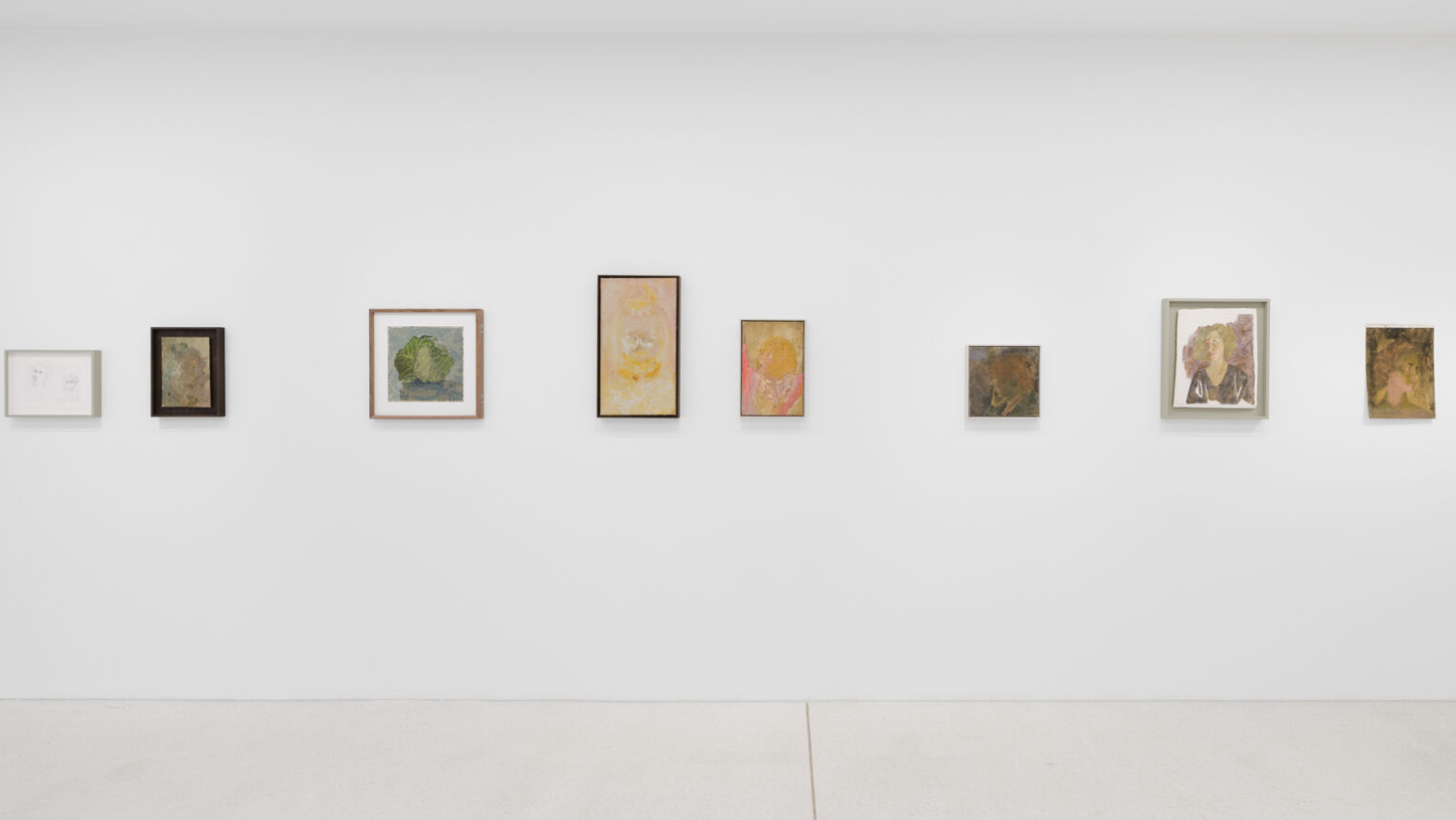
I don’t even have opinions about the selection, because the works “die” for me the moment I stop working on them. I have the feeling that they pass into an afterlife, a world of meanings and interpretations given to them by others, which I can then observe with a certain detachment and even wonder at.
So the process is a curatorial one, and collaboration is decisive. Otherwise, the exhibitions simply wouldn’t happen.
Who are some of your favorite artists/influences?
I used to be surprised, even when I was at art school, by how easily I came to like, one after another, all the artists introduced to us through art history. But in the end, the ones who really stay with you are those with whom you actually work during your formative years.
The first artist who caught my interest, when I was around thirteen, in middle school, was Cézanne. It was his life, more than his work, that fascinated me.
In high school, it was the Renaissance, and especially Piero della Francesca.
At the Academy, I spent a lot of time thinking about Vermeer. I could see in his work that abstraction and figuration existed simultaneously. I tried to work in such a way that the two would become indistinguishable. To achieve this, I would begin with an almost realistic figurative composition, while keeping my attention focused on the empty spaces between things.
After graduating, I spent more time visiting the museums in the city and looking through art books, often for long periods. Traditional Chinese painting, in particular, remained very important to me.
But in 1992, I staged a kind of coup d’état against my own painting and began something based on the palette. The palette became the raison d’être of every painting. The subject itself was something real, right there in front of me, usually something that caught my attention on the spot. From then on, I was no longer interested in any other artist.
Of course, there are many artists whose work I enjoy simply as an art lover. They make me want to work, but they also help me see myself as different from them, and perhaps discover something about my own artistic approach.
Between 2000 and 2015, I was deeply in love with Japanese animation, especially the preparatory artwork produced at Studio Ghibli.
Nowadays, I am interested in artists who, for example, use a printer in their painting practice, or in James Turrell’s use of light, or in Saype’s gentle, gigantic drawings, and above all in the way they disintegrate and are reabsorbed into the landscape.
There is an immense amount of art being made now. We are living in a time of artistic abundance such as the world has never known before!
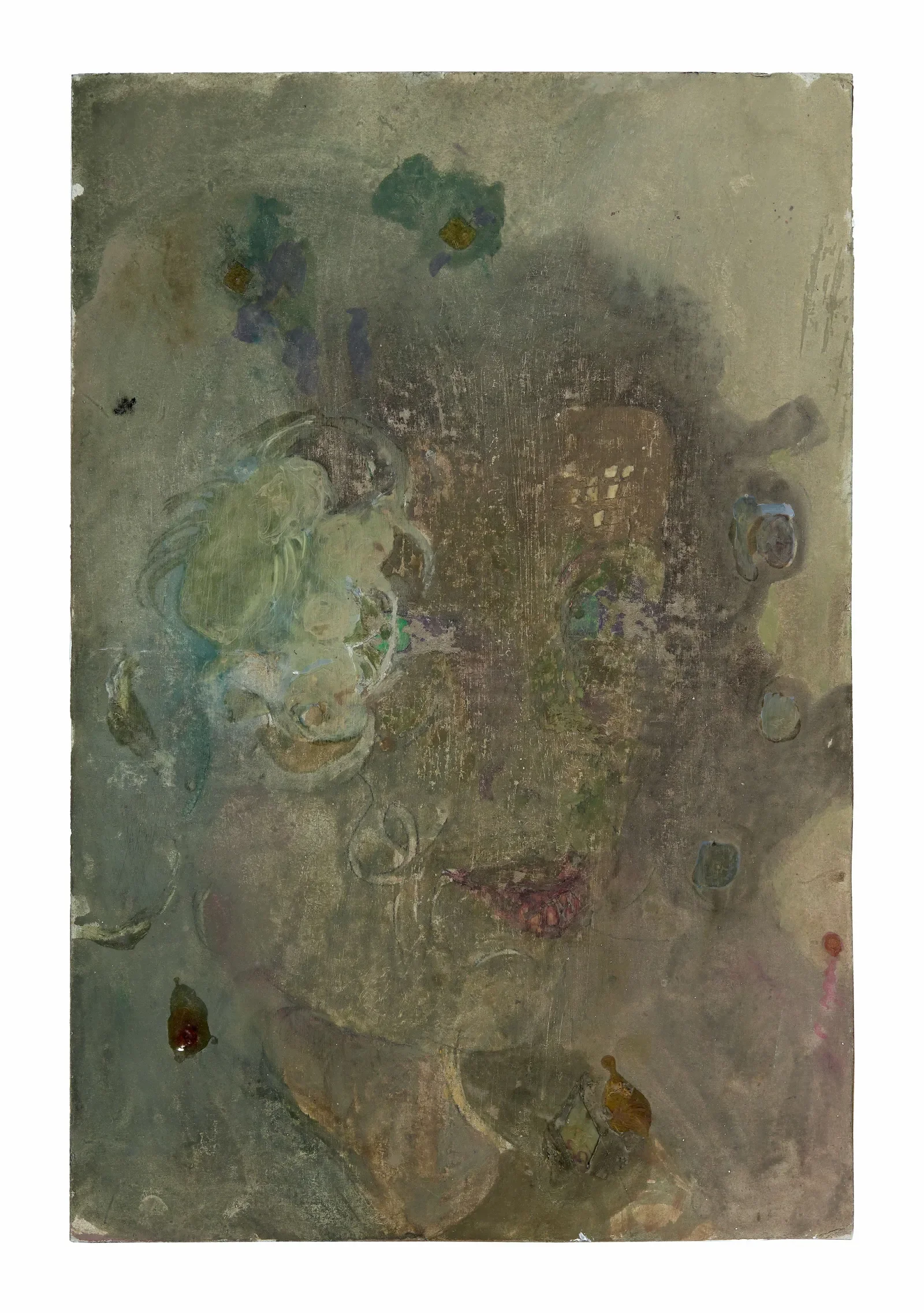
Autoportret, oil on cardboard, 30.5 x 20.5 cm, 2023
Your most recent work seem to address a fragility and delicacy in relation to the creation of an image. Light seems to be diffused and the imagery that emerges seem to come from behind a vail of sorts. Can you say a little about the various technical and psychological methods that factor into your process of working?
A satellite dish casts a shadow along the edge of a window. The shadow breaks apart and meets the stump of a cut branch. To my eyes, they appear as a dark shape resembling a pair of sunglasses. A landscape painting might begin there, with this real-life phantom that the eye catches through the window. It is not an object, it is not a person; it is merely an
impression on the retina. Without thinking about any meaning, I begin to work from this impression and from the colours it suggests to me.
My vision is hungry for such prey. These images always come from reality, and are more often than not ephemeral, perishable. Working with whatever happens to fall within my field of vision, I sometimes find myself being drawn too far into figuration, into the naming of things. In my more recent practice, I have therefore tried to retrace my steps, working backwards towards the light of the support itself. I remove layers of colour with a palette knife, sandpaper or solvent, trying to bring back the simplicity and nakedness of the canvas as it was in the beginning.
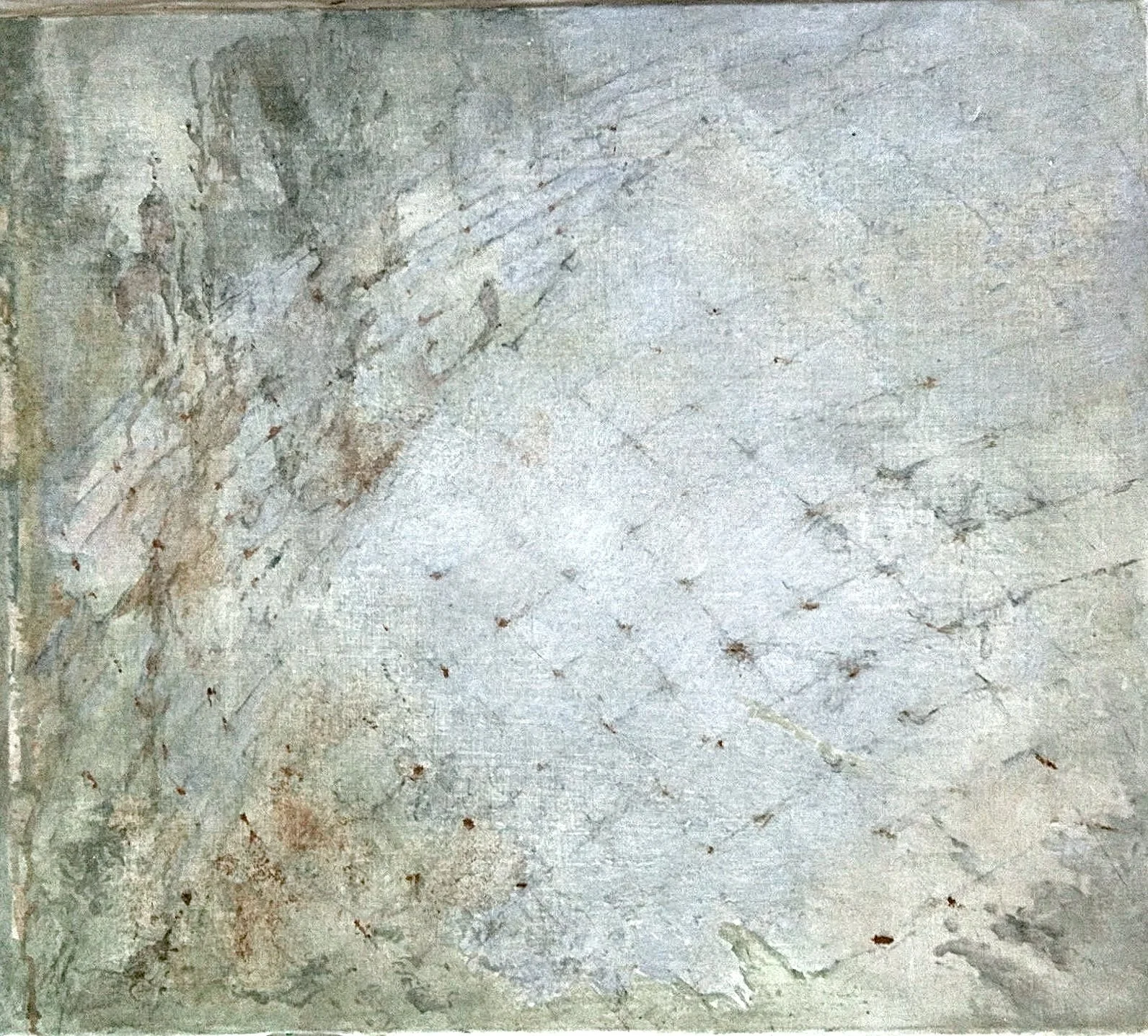
Landscape (Two Domes), Oil on canvas,69 x 60 cm, 2014
It is never possible to remove all the painted matter. What remains are the archaeological traces of layers of colour, with others lying even deeper beneath them, all the way down to the light of the support. So what appears to be a veil is, in fact, the deeper layer shining through the remnants of colour. Figures and shapes become eroded and are able to reveal a more ethereal presence.
Removing colour and then adding it back, only to remove it again, is like a pulse, but also a game with reversibility. Opposed to this back-and-forth movement within the thickness of the paint is the feeling that I could simply pour the material of colour with my own hands, in the simplest possible gesture, and let it form itself into a painting that I would then discover with wonder.
The possibility of being surprised at the end of the process, of privileging chance over control, is what nourishes my enthusiasm for working.
This way of working is also present at times. Using small marks, rhythmically, adding one by one like a farmer, I advance step by step along a previously sketched path, without contemplating my field. In such instances, it is the palette, with its successive mixtures moving in directions of my own choosing, that occupies me most. Without looking at the painted surface, and without making any adjustments, I try to exercise my trust in the final surprise.
Since we are primarily an educational platform, we’re particularly interested in how knowledge affects one’s practice. What are some things that you would consider foundational to an education in the arts?
We studied from nature. It is an ancient practice. Ottoman miniaturists did it; Giotto, as a child, is said to have rediscovered it in his own way. It is essential to the painter’s craft, though not necessarily important to the arts as a whole, which have diversified and developed so many different practices.
Any experience one has at art school can be valuable. But to me, the most precious moment in the learning process is the moment when you feel the need to step back a little, because you are curious to try something you believe might be your own.
What information have you gathered that is now invaluable to your practice?
What a wonderful question!
At art school, you don’t understand why they won’t let you draw with a sharp pencil and instead put a thick brush in your hand, as though they were trying to torment you. It probably takes decades for the memory of that experience to reveal its meaning.
Or take the injunction “Don’t imitate nature!”, when the whole challenge of painting seems to be to produce a convincing trompe-l’œil. What is it for, then?
Very often, these are inherited precepts that remain incomprehensible and yet continue to be taught.
Art is none of the beauty and emotion it promises. The journey never comes to an end, and you may, like Celibidache, who said, “La musique n’est rien”, come to feel that it is indeed almost nothing.
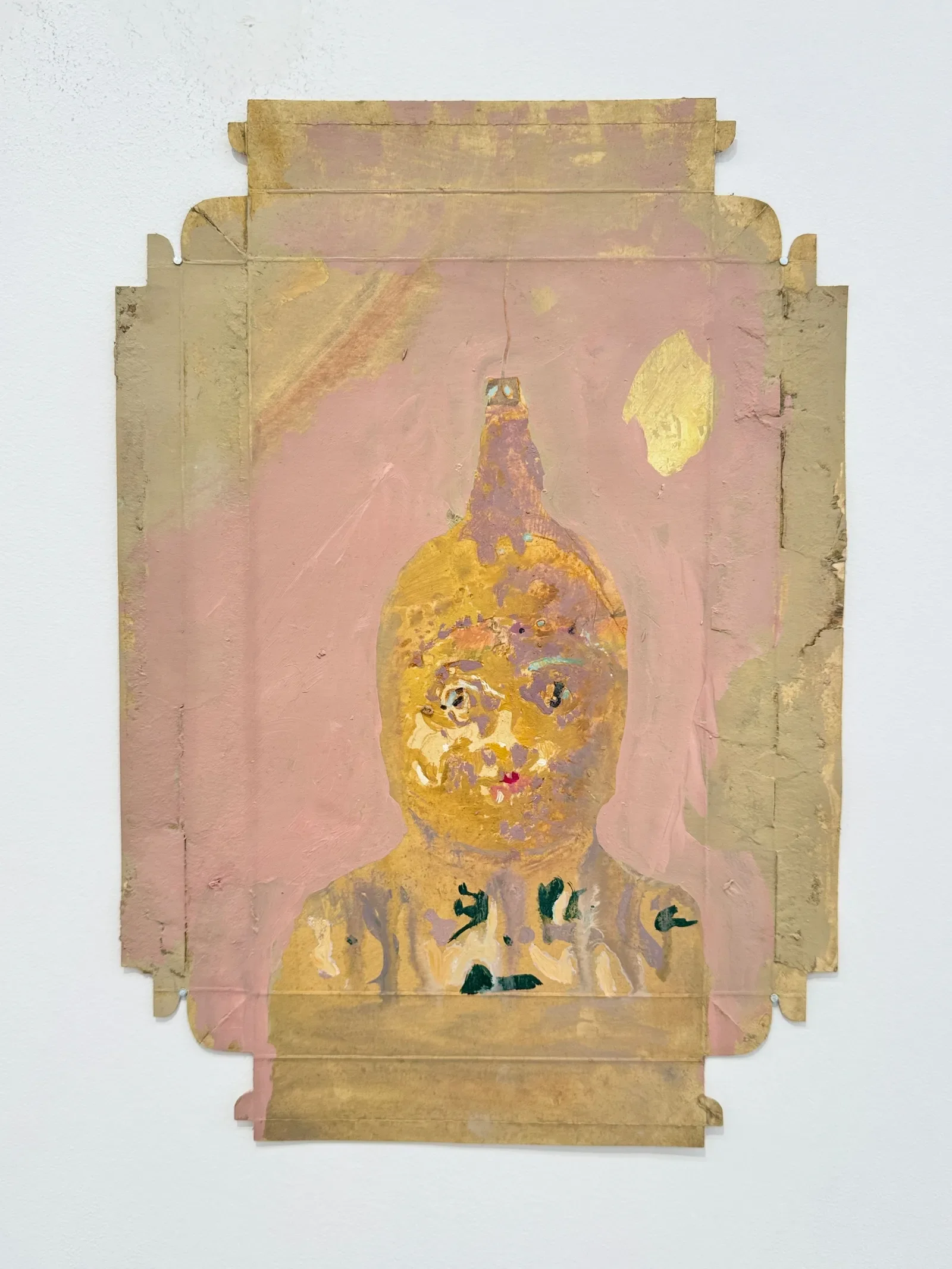
Box with Christmas Ornament, oil on cardboard, 42.5 x 29.5 cm, 2024
